 The Campaign for Grade-Level Reading
March 2015
The Campaign for Grade-Level Reading is a collaborative effort by funders, nonprofits, government agencies, business leaders, states and communities across the nation to ensure that many more children from low-income families succeed in school and graduate prepared for college, a career and active citizenship.

2014 Pacesetter Communities Recognized for Measurable Progress
The GLR Campaign has named 30 communities and seven states as 2014 Pacesetters,  recognizing their measurable progress in addressing some of the challenges children from low-income families face in becoming proficient readers.
“The growth and progress that we’re seeing across the Campaign Network is nothing short of inspiring,” said Ralph Smith, managing director of the GLR Campaign. “These Pacesetters truly represent hope for American educational attainment, particularly for children from low-income families. Whether it’s preparing kids for kindergarten, attacking the ‘summer slide’ or boosting elementary attendance, these communities are demonstrating that we all can make a difference.”
Click here to see the full list, along with individual profiles of each community or state.
National Volunteer Week Offers Opportunity to Recognize Outstanding Reading Tutors
Promoting greater volunteerism and citizen service to help young children gain reading proficiency has been part of the Campaign for Grade-Level Reading’s agenda from the outset, reflecting the reality that volunteers are essential to reach the large number of children who are at risk.
For National Volunteer Week, to be celebrated April 12-18, we are asking communities and partners to send us the names of organizations you work with that provide reading tutors or share your own efforts. We are creating a special web page to honor and celebrate these groups. Photos are welcome, too. Submit the organization names on this form.
In addition, we have compiled template materials to help communities recognize volunteers or host an event. Click here to access template certificates, op-eds and talking points, among other tools, to use throughout the week.
Teaching & Learning Conference Spotlights GLR Campaign
The GLR Campaign was one of the sponsors of Teaching & Learning 2015, a conference that brought together more than 3,000 educators in Washington, D.C., along with such speakers as U.S. Secretary of Education Arne Duncan, human rights advocate Martin Luther King III and filmmaker Ken Burns.
In the opening plenary, GLR Campaign Managing Director Ralph Smith stressed urgency on the cause of third-grade reading, saying, “a child who can read is the most powerful contributor” to their community. He warned that the end result may be dropping out of high school, but the seeds are sown much earlier, when students struggle to “read to learn” in fourth grade.
The conference, hosted by the National Board for Professional Teaching Standards, also includedGLR-sponsored sessions with Mind in the Making author Ellen Galinsky, Attendance Works founder Hedy Chang and Flamboyan Foundation President Kristin Ehrgood. Ehrgood outlined the foundation’s work in District of Columbia public schools; Chang demonstrated how school leaders can use Attendance Works’ online toolkit to combat chronic absence, and Galinsky detailed how some schools work with parents to develop children’s executive function skills to help narrow gaps in school readiness.

GLR Campaign in Council Bluffs, Iowa, Rallies Community to Address Chronic Absenteeism
Thanks to the local GLR Campaign, the Council Bluffs Community School District this monthadjusted its parent notification system for absences to include all absences, excused or unexcused. Now, parents will receive a letter from the district after their child’s third, sixth and ninth absences, regardless of the child’s reason for missing school. The Daily Nonpareil applauded the change, saying, “That goal [of educating every child] cannot be attained if students are not in school.”
The local Campaign implements community-wide attendance awareness campaigns; school-level messaging and incentives to nurture a culture of excellent attendance; early outreach at the beginning of each school year; cross-sector coordination to identify and address the health challenges that are the major contributors to chronic absence; and more. Click here for additional resources on chronic absence.
March’s Bright Spots Communities Expand Access to Summer Learning, School Readiness Resources
Our Bright Spots Communities this month forged creative community partnerships to expand access to summer learning, tailored reading material and parent resources:
- Arkansas Grade-Level Reading Campaign is partnering with the Arkansas Out of School Network (AOSN) to expand access to quality summer learning programs statewide. AOSN will hold a number of events around National Summer Learning Day (June 19, 2015) to raise awareness among parents and policymakers.
- Richmond, Virginia, is among communities across the country benefiting from Dollar General Youth Literacy Grants made to schools, libraries and nonprofits to help young struggling readers. An elementary school used a $33,000 grant to create a “leveled” library of books meeting varying ability levels and used with small groups of students who need extra help. See the Grants and Awards section for more information on Dollar General Youth Literacy Grants.
- Wallowa County, Oregon, is home to a partnership between two local nonprofits — a rural health center and a family support organization — that work together at the health center to promote healthy development, early literacy and school readiness for young children.

Federal Bill Would Provide One Year of Free Pre-Kindergarten
A bill introduced this month by U.S. Senator Bob Casey (D-PA) would provide one year of voluntary, high-quality pre-kindergarten to children across the nation. The Prepare All Kids Act would help states ensure that supported pre-K programs utilize research-based curriculum and employ highly qualified teachers. The same day, Casey also introduced the Continuum of Learning Act, intended to strengthen coordination between early childhood programs and elementary schools. Click here for more information on both bills.
Raising A Reader Hits 15 Million Book Milestone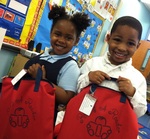
The Raising A Reader program hit the 15 million mark for the number of books shared by children and their parents participating in the organization’s early literacy program. Raising A Reader works with organizations such as the United Way and Head Start to bring literacy resources to families in more than 2,500 locations nationwide. The program is a key partner in GLR communities across the country, including 2014 Pacesetters Springfield, Massachusetts, and Ames, Iowa.
Florence Businesses Lend Support to Reading Program
A new early reading program sponsored by Florence School District One in South Carolina is getting buy-in from local businesses. The Start 2 Read program brings early childhood educators into local companies to provide age-appropriate books and reading tips to parents of young children.
“It’s exciting to know that reading is actually getting into the homes,” said recently retired teacher and Start 2 Read educator Glenda Cottingham. “Parents say their children are excited to read, and the parents can’t wait to read to their children.”

Dollar General Youth Literacy Grants provide funding to schools, public libraries and nonprofit organizations to help students who are below grade level or experiencing difficulty reading. Funding is available for implementing new or expanding existing literacy programs; purchasing new technology or equipment to support literacy initiatives; or purchasing books, materials or software for literacy programs. The deadline for application is May 21, 2015. Click here for more information.

Mississippi Public Schools Struggle with Chronic Absence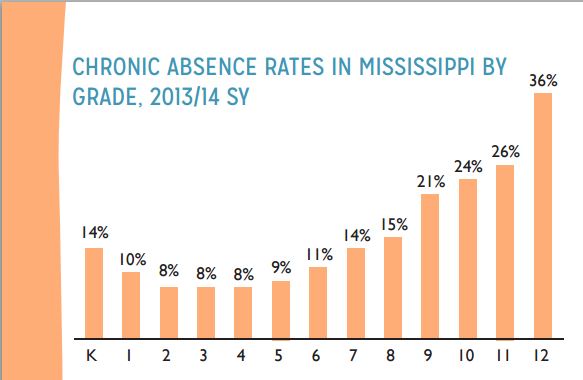
Almost 75,000 Mississippi public school students missed at least 18 days of school during the last school year, according toa new report from Mississippi KIDS COUNT. That figure represents 15 percent of all public school students. Mississippi KIDS COUNT Director Linda Southward echoed the GLR Campaign in the report:
“Children who are chronically absent in kindergarten and first grade are less likely to read proficiently by third grade, and students who don’t read well by that critical juncture are more likely to struggle in school,” said Southward. “They are also more likely to be chronically absent in later years, since they never developed good attendance habits.”
Early Childhood Funding in Nebraska Insufficient for Healthy Kids
Nebraska spends less than 8 percent of its general fund on the health and early education of children, and that’s not enough, according to a new report from the Holland Children’s Movement. Nebraska Children’s Budget: Investing in Possibilities recommends increased public and private investment in effective early childhood education and notes that the number of at-risk children in the state has risen over the past 10 years.