 The Campaign for Grade-Level Reading
April 2014
The GLR Campaign is a collaborative effort by foundations, nonprofit partners, states and communities across the nation to ensure that more children in low-income families succeed in school and graduate prepared for college, a career and active citizenship.

Summer Learning Day Includes Pledge for Action
Summer Learning Day, celebrated on June 20 this year, has always been a great opportunity to build awareness. This year, the GLR Campaign and National Summer Learning Association are challenging communities to expand existing work or launch something new focusing on one or more of six priorities:
 Get healthy and get smart by offering nutritious meals and physical activities daily as a part of summer learning experiences.
- Make every word count by integrating daily reading and other literacy-related activities into summer experiences.
- Start young by expanding opportunities during the summer before kindergarten.
- Follow the numbers by engaging school districts to identify needs and track the progress of children over the summer.
- Determine demand by assessing the supply of and need for high-quality programs.
- Engage families so that they understand the benefits of quality summer learning and can find opportunities, in programs and at home.
Go to NSLA’s pledge page to sign the pledge and register here for a May 1 webinar to learn more.
IMLS, Sesame Workshop Recognized as Pacesetters
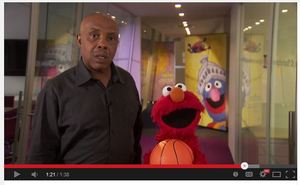 This week, at a gathering of GLR Campaign Partners, the Campaign recognized two organizations as its first Pacesetter Partners for their contributions to improving third-grade reading proficiency. Sesame Workshop was honored for its work to put a focus on the important role of parents in nurturing early literacy, including a video featuring Elmo and Gordon that was created for the Campaign.
The federal Institute of Museum and Library Services was recognized for investing more than $6.8 million in grants to museums and libraries to promote learning from birth through third grade, with a particular emphasis on preparing young children for school and on making summer a time of learning. IMLS also was cited for providing “how to” guidance to museums and libraries and for fostering collaboration between those institutions and other community organizations addressing early learning.
Gearing Up for Attendance Awareness Month
 Attendance Awareness Month does not arrive until September, but we joined Attendance Works and other organizations this month to release a revised Count Us In! toolkit and a new website exclusively for materials and information.
Last year, more than 1,500 people signed up for regular updates and more than 250 schools and communities, including 78 GLR communities, posted activities on our Attendance Action Map. We are hoping to expand on that success and encourage more communities to take concrete steps to reduce chronic absence, such as calculating data, creating attendance teams, developing mentoring programs and addressing barriers to attendance.
Register now for the May 28 webinar on enlisting allies for your attendance campaign.

Resource Guides Offer Support for Growing Healthy Readers
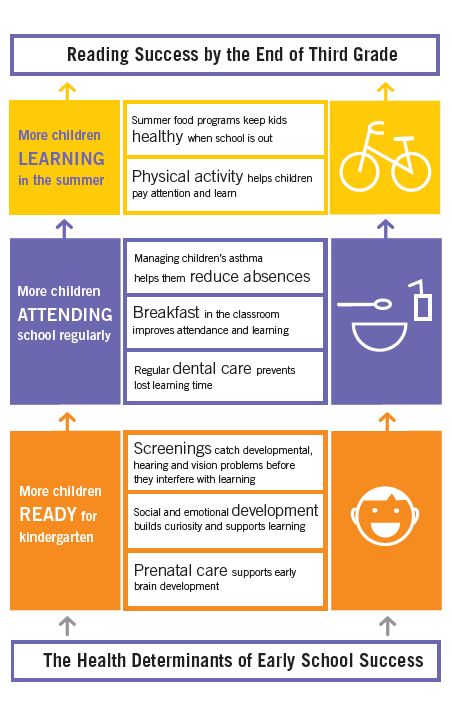
This month, the GLR Campaign released a series of resource guides making the connection between health and learning in the early years. Growing Healthy Readers: Taking Action to Support the Health Determinants of Early School Success shows how to incorporate children’s health and learning priorities into action plans for improving school readiness, school attendance and summer learning.
The guides can help schools, health care providers and nonprofits across the country promote healthy development beginning even before a child is born. To see each guide in full, click here.
The Huddle: Coming Soon to a Screen Near You
Our online platform serving the GLR Communities Network has a new name – the Huddle – and a new look that emphasizes our three community solutions, as well as more opportunities to connect with the 900+ members doing similar work. Everyone who is signed up for the current platform, the Ning, will be moved to the Huddle in the next two to three weeks. If you are not a member or would like to suggest new members, contact susanne@smarterlearninggroup.com.
The GLR Campaign Celebrates National Volunteer Week
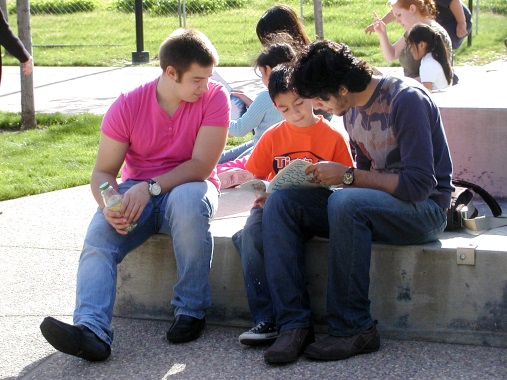 In honor of National Volunteer Week from April 6-12, we launched a recognition page on our website and a social media effort to spotlight the great work of volunteer reading tutors and organizations across the nation.
We received 42 volunteer submissions from 25 different states, ranging from a retired third-grade teacher in Arizona to Texas A&M students in San Antonio to AARP Experience Corps volunteers in Washington, D.C. We even recognized a team of therapy dogs that serve as reading companions to West Virginia students.
Volunteer reading tutors should be celebrated all year round, as they provide the extra hands and hearts to ensure that more children from low-income families learn to read proficiently. Our volunteer recognition page will be live throughout the year, and we encourage you to check out the great work these tutors are doing.
Bright Spots Communities Highlight Promising Efforts
Bright Spots showcase the work that the Grade-Level Reading Communities Network is doing to make progress on school readiness, school attendance and summer learning. The communities featured in April include:
- In Vernon, Connecticut, the school district developed a plan to improve attendance at all seven of its schools, serving 3,500 students.
- In Camden, New Jersey, Born to Read has launched a volunteer-based one-on-one reading program for preschoolers as part of its early literacy initiative.
- Southern Pines, North Carolina, created a new summer learning project tailored to kindergarten through second-grade students reading below grade level.
You can nominate your community for a Bright Spot by emailing Betsy Rubiner.
To share updates on your community’s efforts, email Phyllis Jordan at pjordan@gradelevelreading.net.

 U.S. Education Department Releases Framework for Parent and Community Engagement
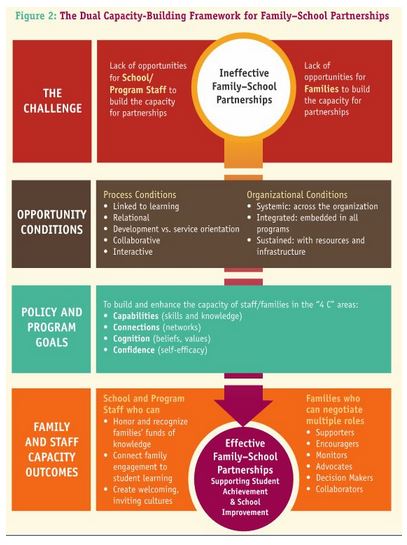
Effective family-school partnerships are key to supporting student achievement and school improvement, according to a new framework released this month by the U.S. Department of Education.
The Dual Capacity Building Framework for Family-School Partnerships offers solutions for schools struggling to build positive relationships with families. The guide identifies the challenge at hand, lists conditions for improvement, and sets policy and program goals that build the skills of family and staff members. A full copy of the framework, as well as additional resources, are available on the Department of Education’s website here.
Senate Committee Learns of Importance of Grade-Level Reading
A U.S. Senate Health, Education, Labor and Pensions Committee hearing on expanding early care and education included testimony from business and city leaders about the value of achieving reading proficiency by the end of third grade.
John E. Pepper, Jr., retired Chairman and CEO of the Proctor and Gamble Company, stressed the importance of a child’s first five years. “How ready a child is to enter kindergarten has predictable consequences for whether they’re ready to read by third grade, and that has predictable consequences for whether they’ll drop out,” said Pepper, speaking for Ready Nation, which brings together business leaders committed to early education.
Providence, R.I., Mayor Angel Taveras also testified, speaking about the benefits of providing high-quality early education and how the GLR Campaign’s community solutions are helping to achieve better outcomes for children from low-income families.
You can listen to the entire committee hearing here.
Power Scholars Academy to Expand Summer Learning Programs to Eight YMCA Associations
BELL (Building Educated Leaders for Life) and YMCA of the USA today announced a partnership to dramatically expand their new summer learning initiative, the Power Scholars Academy. The program is based on BELL’s proven summer learning model and delivered in partnership with Y’s and schools throughout the country. This summer, BELL and the Y will expand the Power Scholars Academy from three to eight YMCA Associations. Programs started as pilots at Y’s last year in Hartford, Conn., and Orlando will build on their success and serve more scholars, while new programs will launch in Montgomery, Ala.; Denver; Washington, D.C.; Clearwater, Fla.; Minneapolis-St. Paul; and San Antonio.
BELL and the Y-USA expect the Power Scholars Academy to serve at least 1,000 scholars in grades K-8 this summer, setting the stage for an even greater expansion in 2015 and 2016 to 48 locations.

TD Bank Funding Will Help Students “Bank on Books”
TD Bank and First Book — a nonprofit organization that provides new books to children in low-income communities — have partnered to provide children grades K-2 with access to literature through a new program.
“Banking on Books” is dedicated to ensuring that students have access to books that foster a love of learning and, ultimately, the tools needed to succeed in school. TD employees will have provided over 22,000 financially themed books at 364 schools, including many in GLR communities, once the program is completed in June. Read more about Banking on Books and see the list of community schools involved here.
W.K. Kellogg Grants Will Fund Family Engagement Models
Earlier this month, the W.K. Kellogg Foundation announced $13.7 million in grants to empower parents as leaders and key decision makers in education. They chose 30 organizations from 18 states and the District of Columbia that are developing and implementing family engagement models in early childhood education. The grantees include several organizations aligned with or working in GLR Network Communities. See the list of organizations here.

This month both of our reports came from GLR Network Communities that examined their data to identify needs and strategies:
Creating a Community Where All Children Thrive by 5
 The Onondaga Citizens League report, Early Childhood and School Readiness: Creating a Community Where All Children Thrive by 5, finds only half of children in Onondaga County, New York, are fully prepared when they start kindergarten. The report highlights gaps in readiness between children living in poverty and their peers and emphasizes a lack of reliable data. It calls for countywide collaboration to establish a dashboard for data collection and to support families of young children.
Reading Proficiency in Oakland Schools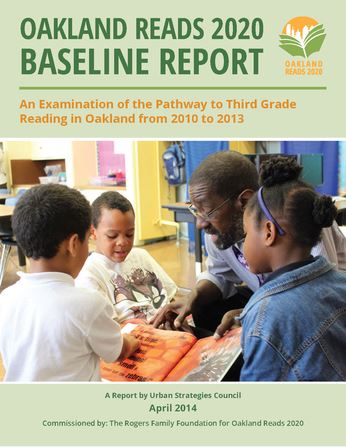
The Oakland Reads 2020 campaign has released a report on the state of literacy in the early grades at Oakland’s public schools. An Examination of the Pathway to Third Grade Reading in Oakland from 2010 to 2013 found that fewer than half of Oakland students were reading proficiently, and that proficiency rates varied widely by race/ethnicity, gender, English language ability and special education status.