 The Campaign for Grade-Level Reading
January 2014
The GLR Campaign is a collaborative effort by foundations, nonprofit partners, states and communities across the nation to ensure that more children in low-income families succeed in school and graduate prepared for college, a career and active citizenship.

New GLR Video Shows How Low-Income Children Fall Behind
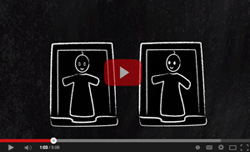 The GLR Campaign this week released a new video underscoring the gap in early readingproficiency rates between children from low-income families and their more affluent peers. Produced by Statisticks, the video uses simple animated figures to show how health factors, early education, attendance and summer learning can make a difference for children from low-income families.
We encourage everyone involved with the Campaign to embed the video on your websites and share on your social media platforms. Also, you can use the video to introduce your next presentation to the community or your nonprofit and philanthropic partners. Statisticks is offering to work with GLR communities at a discounted rate to produce local versions. For more information, contact Joy Moore at joy@gradelevelreading.net.
GLR Network Expands to Include Another 5 Cities, 2 States
Five cities and two states have completed Community Solutions Action Plans and joined the Grade-Level Reading Communities Network.
The newest members of the Network include statewide campaigns in Hawaii and Idaho, as well as initiatives in Sarasota, Fla.; Waukegan, Ill.; Portland, Maine; Memphis, Tenn.; and Tacoma, Wash. Several other communities have submitted letters of intent and are working on their plans for addressing grade-level reading. The Campaign expects to announce a new group of Network communities in July.

2013 Pacesetters Recognized for Mobilization
The GLR Campaign has named two states and 37 communities as 2013 Pacesetters, recognizing their efforts to mobilize civic, business and community leaders to work toward the goal of improving early reading. The announcement marks the first of three announcements this year to recognize exemplary efforts and accomplishments of the communities that are part of the GLR Communities Network.
“These Pacesetter communities saw the potential and seized the opportunities presented by Summer Learning Day and Attendance Awareness Month,” said Ralph Smith, managing director of the GLR Campaign. “Moreover, they took the time to share what they did and what they learned with other communities in the Grade-Level Reading Network.”
Click here for the full list.
Get Ready to Read Across America
With Dr. Seuss’s birthday celebration set for March 3, the GLR Campaign is urging communities to use the occasion to promote the value of early reading and to drive action among parents, caregivers and local organizations working with our youngest children. In addition to joining the National Education Association’s Read Across America effort, the Campaign is partnering with Read Aloud 15 Minutes, a nonprofit organization that is working to make reading aloud every day for at least 15 minutes a top priority. We will be sharing more information and tools in early February.
To share updates on your community’s efforts, email Phyllis Jordan at pjordan@gradelevelreading.net.

KIDS COUNT® Analysis Shows Wider Reading Gap 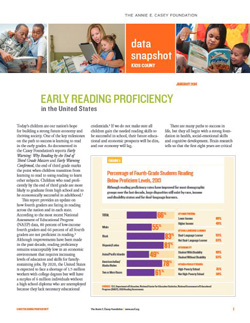
The gap in early reading proficiency between lower- and higher-income students has increased by nearly 20 percent in the past decade, according to a KIDS COUNT® data snapshot, Early Reading Proficiency in the United States, released this week by the Annie E. Casey Foundation.
Overall, 80 percent of lower-income fourth graders and 49 percent of higher-income students are not reading proficiently, according to scores from the 2013 National Assessment of Educational Progress (NAEP). The KIDS COUNT® snapshot analyzes the data further and finds:
- All but six states have made progress on fourth-grade reading proficiency in the past 10 years, but more than half of students in every state still are not hitting that mark.
- Scores for students from higher-income families increased an average 17 percent, compared to a 6 percent improvement for their lower-income peers.
Big Wins for Early Childhood Education in Spending Act
The 2014 appropriations bill approved by Congress and signed into law by President Obama increases government funding for early childhood education by over $1 billion, making early education one of the clear winners of the recent funding battle. The act’s specific investments include $1.025 billion in Head Start funding and $250 million in Race to the Top grants to develop, expand or enhance locally grown state preschool programs. The bill, which passed with bipartisan support, increases early childhood education funding significantly above last year’s levels.
A report released in January by the New America Foundation, Subprime Learning, found that funding for early education has fluctuated wildly in the years since the Great Recession. The report shows millions of children still lack access to quality programs.
Dentists Plan to “Give Kids a Smile”
Through its Give Kids a Smile program, the American Dental Association (ADA) is encouraging dentists to plan local events in February, which is National Children’s Dental Health Month. Activities begin Friday, February 7, with dental professionals providing free oral health education, mass screenings and treatment/restorative care for children from low-income families and children with disabilities. Last year, 400,000 children were reached by 40,000 volunteers.
The ADA also is teaming up with NASCAR and other organizations to promote oral health and advocate for policies that will help improve dental care for underserved children. The ADA has developed a planning guide and other tools for dentists.
Stay on top of all that is new with the Campaign and with the progress of grade-level reading by making regular visits to our website: www.gradelevelreading.net. The site offers a comprehensive news source on issues related to early childhood, reading development and achievement. Additionally, get the latest updates on federal initiatives and state campaigns and read recent studies on child development and literacy.

Summer Learning Applications Due February 14
Summer learning programs that advance early reading can compete for the 2014 New York Life Excellence in Summer Learning Award. The award, administered by the National Summer Learning Association, comes with a $10,000 prize. Last year’s winners included programs in two GLR communities — Boston and Charlotte. If you know of strong summer reading programs, encourage them to apply by February 14.
All applicants receive detailed written feedback — highlighting both strengths and recommendations for improvement based on NSLA’s quality standards. The streamlined application process makes it easy for you to put your program in the running. Download the application here.

Investing in the Early Years Key to a Healthier Nation
The Robert Wood Johnson Foundation has listed investing in America’s youngest children as its top priority for building a healthier America. The foundation’s nonpartisan commission outlined the importance of creating quality standards for childhood development programs and the need to help parents provide nurturing experiences for their children. The commission’s other recommendations focused on integrating health into community development and creating incentives in health care. Read more here.
A Commitment to Pre-Kindergarten Is a Commitment to National Security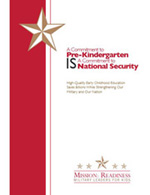
The retired admirals and generals of Mission: Readiness released a report showing that the Obama administration’s state-federal early education proposal could lead to 2 million more high school graduates nationwide and $150 billion in net economic benefits to society over 10 years. Recognizing that 75 percent of all young Americans are unable to join the military, often because they do not have a high school diploma or cannot score highly enough on the military’s entrance exam, the retired military leaders called the early learning proposal a national security imperative.