 The Campaign for Grade-Level Reading
May 2014
The GLR Campaign is a collaborative effort by foundations, nonprofit partners, states and communities across the nation to ensure that more children in low-income families succeed in school and graduate prepared for college, a career and active citizenship.

Take the Summer Learning Pledge
 In celebration of Summer Learning Day 2014, National Summer Learning Association (NSLA) and the GLR Campaign are challenging communities to make an investment in summer learning for children from low-income families by taking our summer learning pledge, committing to one or more of six action steps to expand opportunities for summer learning and health. Communities can find tools and resources for each of the action steps on NSLA’s website, and share events on the interactive Summer Learning Day map. Already, more than 30 GLR communities from 18 states have signed the pledge.
In Baltimore, for instance, the local GLR coalition is launching READ 15, an initiative to encourage students to read a minimum of 15 minutes a day. Local libraries will use tracking logs in their summer reading programs and City Schools is distributing summer packets to rising K-5th grade families with reading lists and logs. Across California, GLR communities are offering Lunch at the Library, which combines a summer feeding program with literacy opportunities. The program is also being offered in Georgia and Idaho this summer.
NCSC Expands Support for Network Communities Driving with Data
As part of its ongoing pilot of the Results Scorecard, the GLR Campaign’s Network Communities Support Center has joined 12 other national and community partners to create the National Results and Equity Collaborative, designed to deliver technical assistance on a consistent set of strategies and solutions that will help children from low-income and minority families succeed. “From a local perspective, it means I can have a common language across different agencies and initiatives, like United Way, Promise Neighborhoods, Community Schools and others,” said Merilee Rutolo, chief operating officer at the Center for Family Services in Camden, New Jersey, one of the partners. To learn more and see the full roster of partners, click here.

Springfield Social Media Campaign Encourages Family Reading
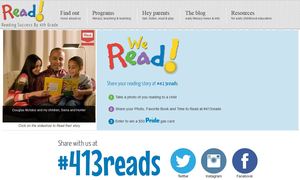 In Massachusetts, Springfield’s Cherish Every Child/Read! has partnered with ABC40 to launch a new social media campaign aimed at getting parents to read with their children. Parents are encouraged to upload pictures of them reading with their children through Facebook, Twitter and Instagram using the hash tag #413reads. All pictures are featured on the campaign’s website, and each month one image is chosen to win a $50 gift certificate for gas. Read more about the initiative here.
Bright Spots Communities Highlight Promising Efforts
Bright Spots showcase the work that the Grade-Level Reading Communities Network is doing to make progress on school readiness, school attendance and summer learning. The communities featured in May include:
- Bridgeport, Connecticut, offers Kick Off to Kindergarten, a free summer program designed to introduce literacy, numbers, group play and more to pre-K students.
- Delray Beach, Florida, supports literacy-rich summer learning programs and developed a data-sharing agreement between the city and the county school district to assess the impact on summer learning.
- Cincinnati, Ohio, identifies and treats mothers with depression through Every Child Succeeds, a home visiting effort to foster more nurturing and stimulating interactions with their children.
- San Antonio, Texas, serves 187 4-year-olds in a Dual Language Head Start program with classes evenly split between Spanish speakers learning English and English speakers learning Spanish.
You can nominate your community for a Bright Spot by emailing Betsy Rubiner.
To share updates on your community’s efforts, email Phyllis Jordan at pjordan@gradelevelreading.net.

National Pre-K Report Finds Drop in Number of Pre-K Students
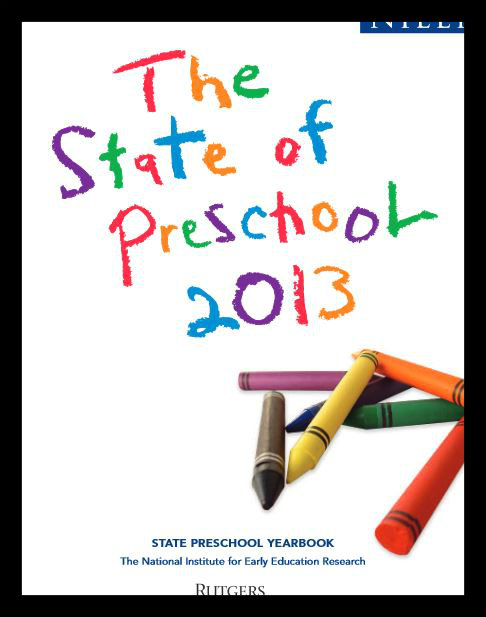 The number of 4-year-olds enrolled in a state-funded preschool program dropped in 2012-2013 school year, the first decrease since tracking began a decade ago, according to a new report from the National Institute for Early Education Research. The annual preschool report found that 28 percent of American 4-year-olds were enrolled in programs and that funding is making a slow recovery after a dip following the economic downturn. The report also provides information on early childhood education efforts in the 10 states and the U.S. territories that do not provide state-funded pre-K.
Oklahoma Amends 3rd Grade Reading Bill
Faced with test results showing that as many as one-fifth of Oklahoma third graders could be held back this year, the state legislature approved changes to its mandatory retention law that would allow more local input from parents and teachers.
The legislation was initially vetoed by Gov. Mary Fallin, who said it would gut the retention policy that was approved in 2011 and is taking effect for the first time this school year. But the legislature quickly overrode her veto.
Oklahoma is one of four states where retention legislation goes into effect for the first time this spring. Arizona, North Carolina and Ohio also will be making decisions based on test results.
The GLR Campaign supports a smart promotion approach that identifies struggling students in the early grades, works to close their learning gaps, positions retention only as a last resort and ensures that retention is accompanied by additional interventions.
U.S. Education Department Seeks Information on Kindergarten Entry Assessments
The U.S. Education Department is asking states and school districts that use kindergarten entry assessments to share their experiences — the good and the bad. The Department hopes to study 24 schools within 12 school districts in four states to assess how effectively these assessments are being used. The Education Department hopes to use the findings to provide better technical assistance. Here is the notice in the Federal Register: http://1.usa.gov/RFcRro

$135 Million in i3 Grants Available for School Districts, Nonprofits
The U.S. Department of Education just announced the beginning of their 2014 Investing in Innovation (i3) program’s Scale-up and Validation categories. The i3 program aims to develop and expand practices that accelerate K-12 student achievement and prepare students to succeed in college and in their careers. This year, school districts and nonprofit organizations, in partnership with districts or schools, are eligible to compete for nearly $135 million. Applications are due June 24. Learn more and apply here for Scale-up grants and here for Validation.
Library Grants Available to Communities
The Lois Lenski Covey Foundation, Inc. awards grants to libraries and bookmobiles for purchasing books published for young people preschool through grade 8. Grants for 2014 will range from $500 to $3,000 and are specifically for book purchases. Applications are due June 16. Apply here.
Small rural libraries in need of book donations may find a helping hand with the Libri Foundation, which donates new hardcover children’s books to rural libraries that meet certain criteria. Applications are due August 15. Apply here.

 Gateways to Two Generations: The Potential for Early Childhood Programs and Partnerships to Support Children and Parents Together
Because a child’s success depends in part on family success, many anti-poverty efforts are taking a two-generation approach that focuses on children and parents at the same time. This new report from the Aspen Institute highlights how these programs are supporting families’ educational success and economic security, documents the evolution of these efforts and emphasizes the importance of partnership in two-generation approaches. View the full report here.
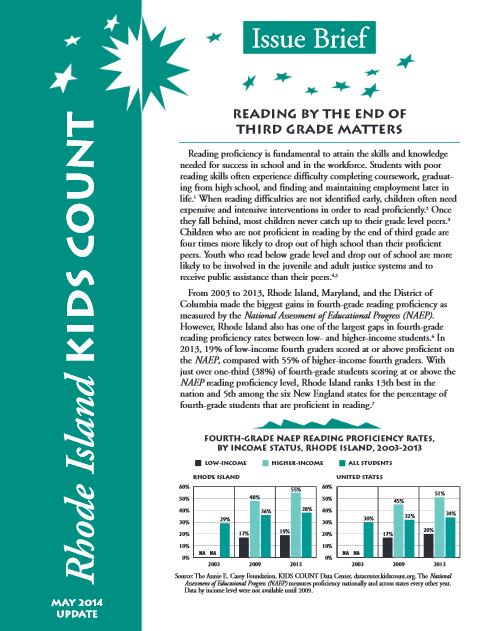 Reading by the End of Third Grade Matters
This new issue brief from Rhode Island KIDS COUNT looks at fourth-grade NAEP reading proficiency rates by income status in the state from 2003-2013, finding that large achievement gaps persist between children of low- and higher-income families and among children of different racial and ethnic groups. The brief recommends strategies that strengthen early education and support educators working with children from infancy through third grade. The full issue brief can be found here.