 The Campaign for Grade-Level Reading
January 2015
The Campaign for Grade-Level Reading is a collaborative effort by funders, nonprofits, government agencies, business leaders, states and communities across the nation to ensure that many more children from low-income families succeed in school and graduate prepared for college, a career and active citizenship.

GLR Campaign Welcomes Fourteen Communities Plus West Virginia
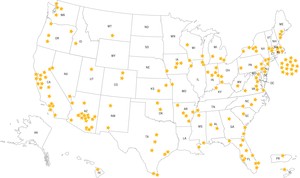 Fourteen new communities from Maine to Florida and Mississippi to Oregon — plus the state of West Virginia — have joined the GLR Campaign. The additions mean that community organizations working toward reading proficiency for elementary students are now operating in 168 cities, counties and states, a Network that covers nearly 25 percent of America’s population. All told, cities in 41 states across the country — plus the District of Columbia, Puerto Rico and the U.S. Virgin Islands — have committed to get more kids reading on grade level by the end of third grade.
The newest members of the GLR Network, in addition to West Virginia, include Avondale and Bullhead City in Arizona; Manatee County, Fla.; Cedar Valley, Iowa; Waterville and Lewiston in Maine; Lafayette County, Miss.; Billings, Mont.; Albuquerque, N.M.; Herkimer/Oneida counties and Chemung County in New York; Yoncalla and Earl Boyles in Oregon; and Philadelphia, Pa.
Communities interested in joining the GLR Campaign can find information on how to get startedhere.

“Providence Talks,” Former Mayor Angel Taveras Spotlighted for Efforts on Word Gap
A recent New Yorker piece recognized Providence Talks, former Providence Mayor Angel Taveras’s signature early literacy program, as “the most ingenious of several new programs across the country that encourage low-income parents to talk more frequently with their kids.” In 2012, Taveras made reading proficiency by the end of third grade the cornerstone of his educational plan for the city, launching Providence Talks and its partner program Providence Reads. Providence Talks aims to close the word gap between children in low-income households and their higher-income peers by providing low-income parents with a comprehensive picture of their children’s daily auditory environment and offering coaching and resources to boost their children’s adult daily word count.
The GLR Campaign was pleased to recognize Mayor Taveras as a Campaign Pacesetter last October in honor of his exemplary leadership on early literacy and child well-being in Providence.
Sarasota and Manatee Counties Welcome GLR Director
GLR Campaign Managing Director Ralph Smith visited Sarasota and Manatee counties in Florida this month to visit with school and community leaders. Smith toured two schools — Alta Vista Elementary in north Sarasota and the Visible Men Academy in south Manatee — that have taken steps to end multi-generational poverty and engage both children and parents from low-income families.
GLR Campaign efforts are officially underway in both counties, led by a public-private collaborative including the United Way, The Patterson Foundation and the Community Foundation of Sarasota County. In Manatee County, less than half of third-grade students earned at least a passing grade on the 2013 state reading exam.
All-America City Awards Will Recognize Communities’ Efforts to Support Vulnerable Boys and Young Men
The National Civic League’s (NCL) All-America City Award program recognizes 10 communities each year for outstanding civic achievement. This year, NCL is embracing President Obama’s “My Brother’s Keeper” initiative, recognizing communities that have worked on engaging and supporting vulnerable boys and young men. Denver Mayor Michael B. Hancock, chairman of the board at NCL,announced the program during a meeting of the U.S. Conference of Mayors’ My Brother’s Keeper Task Force at their Winter Meeting in Washington, D.C.
The GLR Campaign is committed to addressing the unique challenges facing young men of color in school. Among those students who do not read well, the dropout rates are twice as high for African-American and Hispanic students as they are for white students. Communities responded overwhelmingly to the 2012 AAC awards that highlighted grade-level reading, galvanizing the Campaign as we know it today. We encourage community leaders to consider this year’s program as well.
January’s Bright Spots Communities Promote School Readiness and Literacy for Students and Parents
Our Bright Spots Communities this month offer techniques for promoting consistent reading throughout the school year, as well as supporting and engaging with parents:
- Baltimore, Maryland Raising A Reader (RAR), in partnership with Baltimore City Public Schools and Head Start programs, will provide books and family reading strategies to more than 11,000 Baltimore-area children. Funding from Target Corporation allowed RAR to expand its nationally successful literacy program to Baltimore.
- Longmont, Colorado About 100 families were served in 2014 by two parent education programs that offer school readiness and support — Abriendo Puertas/Opening Doors and Nurturing Parenting. The programs are expanding to serve 130 families.

Duncan, Obama Call for Expanded Access to Child Care and Early Education
This month saw two major proposals for middle- and low-income parents from Education  Secretary Arne Duncan and President Barack Obama. As Congress debates revising the Elementary and Secondary Education Act — commonly known as No Child Left Behind — Duncansaid in a speech that any rewrite of the law must include expanded access to high-quality early education, particularly for low-income families. Meanwhile, President Obama called for expansion of a program that provides child care subsidies to low- and middle-income families with young children and promoted a plan to triple the maximum child care tax credit in the State of the Union.
Attendance Works Releases Messaging Toolkit to Emphasize Daily Attendance in the Face of Inclement Weather
Every parent knows that winter weather can present serious barriers to getting children to school on time — not to mention the colds, allergies and fevers that often come with the season. These challenges make it even more important to remind parents of the importance of daily attendance. This month, Attendance Works released a messaging toolkit to help parents and community members develop strategies to keep kids in school in the winter months. Click here to see how GLR communities have been working to promote daily attendance for years.
Mississippi Awards $1.5 Million in Reading Grants for Third Graders
The Mississippi Board of Education awarded nearly $1.5 million in grants to help 34 struggling schools meet the state’s new third-grade reading requirements. Last year, about 18 percent of Mississippi’s 37,000 third graders received the lowest possible score on the state reading exam. Schools can use the money to hire general reading coaches or tutors, or to pay for supplies, training or after-school and summer programs.

The Express Scripts Foundation funds state and local initiatives that support school readiness and improve literacy to help prepare underserved youth for higher education and success in life. Grant amounts range from $500 – $200,000. Deadlines are March 1, June 1, September 1 and December 1, annually. Click here for more information.

Quality Counts 2015 Surveys the State of Early Education
Education Week’s annual Quality Counts report focuses on early learning this year, providing a comprehensive look at child care, preschool and state-level programs. The report includes an original analysis of participation in early education programs, poverty-based gaps in enrollment and trends over time, captured in an Early Education Index that grades each state on key indicators. The nation as a whole earns a D-plus on the index.
Kids and Family Reading Report
Scholastic’s Kids and Family Reading Report surveys thousands of parents and children each year to evaluate what kinds of books kids enjoy, how they pick reading material, how often they read  and more. Among the findings this year: reading aloud to children, even after they are old enough to read on their own, is a strong predictor that they will be frequent readers throughout school.
Head Start Program Helps Reduce Childhood Obesity
Children who participate in Head Start tend to have a healthier weight by kindergarten than similarly aged children not in the program, according to a new study. Changes in Body Mass Index Associated With Head Start Participation found that in their first year in Head Start, obese and overweight kids lost weight faster than two comparison groups of non-Head Start kids. Underweight children in Head Start also gained weight faster compared to the control group.
Low-Income Students Now a Majority in Public Schools
A new report from the Southern Education Foundation finds that a majority of students in public schools come from low-income families. A New Majority, based on state-level data collected by the National Center for Education Statistics, finds that 51 percent of public schoolchildren nationwide were eligible for free or reduced-price lunches in 2013. Nineteen of the 21 states with a majority of low-income public schoolchildren were located in the South and West.