 The Campaign for Grade-Level Reading
July 2014
The Campaign for Grade-Level Reading is a collaborative effort by funders, nonprofits, government agencies, business leaders, states and communities across the nation to ensure that many more children from low-income families succeed in school and graduate prepared for college, a career and active citizenship.

GLR Network Expands to Include 10 More Communities
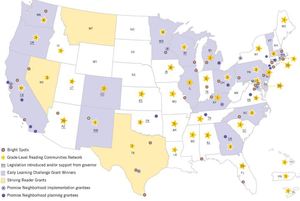 The Campaign for Grade-Level Reading is pleased to welcome 10 new communities to our Grade-Level Reading Communities Network. They include: seven Arizona communities — Buckeye, Chandler, Cochise County, Globe-Miami, North Gila County, Scottsdale and Tempe; two from Connecticut — Colchester and Waterbury; and New Bedford, Massachusetts. The new communities reflect a deepening commitment in three states already actively involved in the GLR Campaign.
As GLR Network communities, each place has developed Community Solutions Action Plans to address school readiness, school attendance and summer learning — the three underlying challenges that can keep young children, especially those from low-income families, from learning to read well. Learn more about joining the GLR Communities Network here.
Read Aloud 15 MINUTES Launches Seize the Summer Campaign
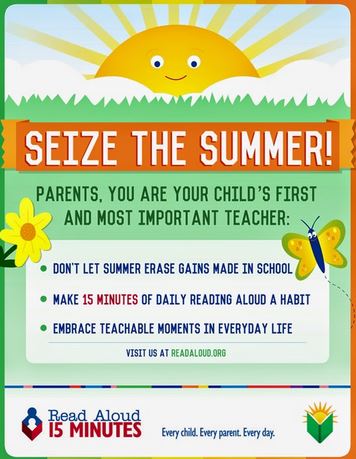 Read Aloud 15 MINUTES, a GLR Campaign partner focused on encouraging parents to read to their children, is promoting summer reading in its Seize the Summer campaign.
More than 50 of our communities and partners signed on to the GLR page on the Read Aloud 15 MINUTES website and downloaded materials and social media posts during the nonprofit’s March reading campaign. If you have not already signed up, do so today by clicking here. Read Aloud 15 MINUTES will release a new batch of materials during an October surge.

New Britain Sees Fewer Chronically Absent Students
Chronic absence numbers are down again in New Britain, Connecticut, elementary schools as the school district, the state, nonprofits and local philanthropy work together to bring more children to school every day. The number of chronically absent elementary students dropped in every elementary school grade, including a 36 percent decline in second grade.
Part of the district’s strategy to boost attendance includes the use of family intervention specialists and an attendance director. School staff and families also are working with the Coalition for New Britain’s Children, the Community Foundation of Greater New Britain, Attendance Works and others to change attitudes about the importance of school attendance.
September Counts: Plan for Attendance Awareness Month
 New research released this week shows that poor attendance in the first month of school can predict chronic absence later in the year. This information underscores the importance of marking Attendance Awareness Month in September. Be sure to post your plans on the Attendance Action Map and share what you are doing to raise awareness about chronic absences. Attendance Works and United Way Worldwide are hosting a webinar on August 6 to release a new video for parents and provide other ideas for spreading the word about good attendance. They are also offering new, free materials for communities to download:
- Color-me banners and handouts that students can color in and post in schools.
- A poster that can be used in schools, doctors’ offices or businesses.
- New badges with the slogan “Attend Today, Achieve Tomorrow” that can be turned into stickers or window decals.
- Redesigned attendance worksheets for teachers to share with parents during parent-teacher conferences.
July’s Bright Spots Communities Highlight Attendance, School Readiness Efforts
Our Bright Spots this month include attendance initiatives as well as an innovative summer program aimed at getting children ready for kindergarten:
- The Arkansas Campaign for Grade-Level Reading is working with school districts across the state to reduce chronic absence and develop a model attendance policy.
- Eugene, Oregon, is promoting school readiness with the Kids in Transition to School summer program for children entering kindergarten and their parents.
- Kent County, Michigan, uses a community schools approach that brings services into schools to decrease chronic absenteeism and help students and their families succeed.
- Syracuse, New York, has used Imagination Library to distribute more than 50,000 books since 2010 and to serve 3,000 children, many from low-income and refugee families.
To nominate a community as a Bright Spot, email Betsy Rubiner at brubiner@gradelevelreading.net.
California Communities Gather for Statewide Summit
About 50 GLR community leaders from across California gathered in Sacramento on July 17 to hear from GLR Campaign partners, state officials and their peers about the best ways to promote grade-level reading proficiency among low-income children.
The day-long event featured presentations on school readiness, attendance and summer learning, as well as a discussion about integrating state and local efforts. Communities said the top challenges remain broadening their coalitions and keeping stakeholders engaged; funding the work; acquiring and effectively using data; and replicating promising or proven programs.
To share updates on your community’s efforts, email Phyllis Jordan at pjordan@gradelevelreading.net.

New Poll Shows Bipartisan Support for Investing in Early Education
A full 71 percent of voters support further investments in early education, with strong support among both Democrats and Republicans, according to a new poll from the First Five Years Fund. The poll found that 64 percent of voters want political leaders to do more to improve kindergarten readiness, while 70 percent support federal funding to help increase access to high-quality early childhood programs for lower-income families. The full poll results can be found here.
60 of the Nation’s Largest School Districts Join My Brother’s Keeper Initiative
The White House partnership with philanthropy to improve the educational futures of black and Latino boys this month welcomed 60 of the nation’s largest school districts, representing about 40 percent of all boys of color living below the poverty line. The districts will work with My Brother’s Keeper to boost educational outcomes by tracking data on black and Latino boys to facilitate early intervention, reducing the number of boys of color who are suspended or expelled and increasing graduation rates.

New Funding Supports Healthy Readers
 The Voices for Healthy Kids’ Strategic Campaign Fund, a joint initiative by the American Heart Association and Robert Wood Johnson Foundation, will award one-year grants of up to $90,000 to support advocacy campaigns focused on fighting childhood obesity.
The grants target six advocacy priorities, including increased access to affordable healthy foods and keeping children engaged in physical activity outside of school hours. Priority will be given to campaigns reaching the populations with the greatest need and/or those with the greatest potential to impact policies to help reduce childhood obesity. To learn more about the grants, click here.
IMLS Awards Grants to 3 Library Systems to Promote Early Learning
 The Institute of Museum and Library Services awarded three separate grants totaling $771,854 to support early learning opportunities through museums and libraries, reinforcing recommendations from the policy report IMLS prepared in partnership with the GLR Campaign: Growing Young Minds: How Museums and Libraries Create Lifelong Learners.
The BUILD Initiative in Boston will coordinate museum and library efforts with early childhood systems to support the growth and development of children from birth to age 8. The Georgia Public Library Service will provide a customized early literacy program within libraries to reach parents of young children. The Online Computer Library Center in Dublin, Ohio, will take part in a new service model for public libraries that features interactive programs for young children intended to boost early literacy.
IMLS, which has directed millions in grants for grade-level reading priorities, is one of the GLR Campaign’s Pacesetter Partners.

New America Report Recommends More Focus on Early Education 
Beyond Subprime Learning: Accelerating Progress in Early Education, a new report from New America’s Early Education Initiative, urges education policymakers to put more focus on teaching and learning from birth through third grade — specifically by streamlining programs, standards and eligibility requirements, and by tapping into sources for improved public funding.