 The Campaign for Grade-Level Reading
July 2015
The Campaign for Grade-Level Reading is a collaborative effort by funders, nonprofits, government agencies, business leaders, states and communities across the nation to ensure that many more children from low-income families succeed in school and graduate prepared for college, a career and active citizenship.

Eleven Communities Plus State of West Virginia Join Campaign
 The 55 counties of West Virginia plus another 11 communities spread across the country have joined the GLR Campaign, committing to work collaboratively to increase the number of children reading at grade level by the end of third grade. The addition of these 66 new sites means that community organizations pursuing the goal of reading proficiency for elementary students now are operating in 232 cities and counties across the country. With the addition of a first community in South Dakota, the GLR Network now has communities in 42 states — plus the District of Columbia, Puerto Rico and the U.S. Virgin Islands —that have recognized the problem and resolved to do something about it.
“These communities all have put a stake in the ground around third-grade reading,” said Ralph Smith, the managing director of the GLR Campaign. “Their approaches to the problem will differ, but they share a sense of urgency about the need to ensure that these vulnerable children find more hopeful futures.”
Click here to read the GLR Campaign’s press release, including a full list of the new communities.

September Counts: Plan for Attendance Awareness Month
 Research shows that poor attendance early in the school year can predict chronic absence later on. This information underscores the importance of recognizing Attendance Awareness Month (AAM) in September. Attendance Works is offering a host of new materials to help communities mobilize:
- A toolkit detailing strategies for intervening with chronically absent students and communicating effectively about attendance;
- A video on engaging parents to fight chronic absence;
- Promotional materials, including social media posts, banners and flyers to display in schools and offices, decals, infographics and more; and
- An attendance awareness “house party” planning kit with handouts and a sample agenda.
When you stop by to check out the new materials, don’t forget to post your AAM plans on theAttendance Action Map.
West Virginia Campaign for Grade-Level Reading Starting Strong
All 55 West Virginia counties were recognized this month for committing to the nationwide GLR Campaign by Ron Fairchild, director of the GLR Campaign’s Network Communities Support Center. West Virginia was announced as a statewide campaign partner in January 2015. Of the 60 percent of West Virginia students who come from low-income families, only a third can read proficiently by the end of the third grade, according to the state Department of Education.
“We are committed to a statewide early childhood focus where we teach every child to read on grade level by the beginning of third grade and where pre-literacy development is essential to closing achievement gaps,” said state Superintendent of Schools Dr. Michael Martirano.
July’s Bright Spots Communities Step Up Efforts to Promote Summer Reading, Combat Chronic Absence
Our Bright Spots Communities this month are receiving national recognition for programs that address chronic absence, summer slide and school readiness:
- San Francisco, California Fifty-thousand children from low-income families in the greater San Francisco Bay Area will benefit from summer reading programs thanks to a philanthropic initiative tied to Super Bowl 50 that was developed in collaboration with the GLR Campaign and local campaigns in a 12-county region. Learn more about The Re(a)d Zone here.
- Marshalltown, Iowa Marshalltown is boosting school readiness and attendance among young children from low-income families, using the Perfectly Punctual Campaign. The community was recognized as a 2014 Pacesetter after its number of school-ready kindergartners increased from 25 to 32 percent between 2011-12 and 2013-14.
- Hartford, Connecticut Hartford’s chronic absence effort, launched in 2013, helped earn the GLR community a 2014 Pacesetter honor. During the 2014-15 school year, half of Hartford’s 30 public schools serving elementary students saw chronic absence drop by at least 5 percent from the previous year.

Summer Literacy Program Rolls Out Across Philadelphia
 Organizations across Philadelphia — from camps to nonprofits to museums — are including a daily literacy component in their programs this summer as part of a citywide literacy initiative. Read! by 4th is led by Free Library President and Director Siobhan A. Reardon, President of Wells Fargo for the Greater Philadelphia/Delaware Region Greg Redden and School District of Philadelphia Superintendent William Hite.
“Students need every resource to foster lifelong reading habits,” said Hite in The Philadelphia Tribune. “Through Read! by 4th, we can maximize our efforts to help every student acquire grade-level literacy skills.”
Baton Rouge Aims to Improve School Readiness for Young Boys
Baton Rouge officially joined the federal My Brother’s Keeper (MBK) initiative this month with a program focused on preparing black and Latino boys to read on grade level by the end of third grade. Mayor-President Kip Holden kicked off the program at a launch event that drew more than 150 supporters. Members of Baton Rouge’s MBK task force say they plan to focus much of their initial work on early literacy, especially local volunteer programs.
RSK on the Go! Puts Summer Learning Skills at Parents’ Fingertips
 The Brooklyn Public Library’s Ready, Set, Kindergarten! (RSK) program has provided early literacy tips and activity ideas to parents for years. Now, parents enrolled in RSK can sign up to receive those tips in regular text messages through RSK on the Go! The library enrolled nearly 300 parents in the first three months of the texting initiative. Two of the program coordinators shared their experiences with the unique challenges of getting an early literacy texting program up and running in the School Library Journal.

United Way Celebrates Pacesetter Award with $500,000 in Grants
Following the recognition earlier this year of Gulfport, Mississippi, as a 2014 Pacesetter community, the United Way of South Mississippi celebrated the award and announced $500,000 worth of grants to early learning programs that contributed to the effort. CEO Cindy Walker presented 10 local agencies with grants at a ceremony.
Salisbury University Awarded Grant to Expand Early Intervention Program
Salisbury University (Maryland) received a $40,000 award from the Quality Health Foundation of Easton to expand its Lower Shore Visiting Intervention Program, which addresses behavioral, mental health and social/emotional development issues in children from birth to age 5. The award doubles the program’s funding from last year and will facilitate more screenings for families and children not enrolled in licensed day care.
Tutoring Receives Big Boost in Dubuque
AmeriCorps tutors in Dubuque, Iowa, met with over 1,000 students in the 2014-15 school year after the organization rewrote its grant application to support the local GLR Campaign and received a $210,581 grant. According to the DIBELS (Dynamic Indicators of Basic Early Literacy Skills) assessment, two-thirds of students who frequently worked with AmeriCorps tutors increased their reading scores by the end of the year.

Colorado Early Literacy Effort Making Impact
The early literacy programs created by a 2012 Colorado law have reduced the percentage of young students in the state reading below grade level, according to a study commissioned by the advocacy group Colorado Succeeds. The READ Act Implementation Study finds that about 5,000 more K-3rd grade students were reading on grade level in 2014 than in 2013. The READ Act requires literacy evaluations of K-3rd grade students at the beginning of each school year and that schools create individual reading plans for students identified as significantly behind.
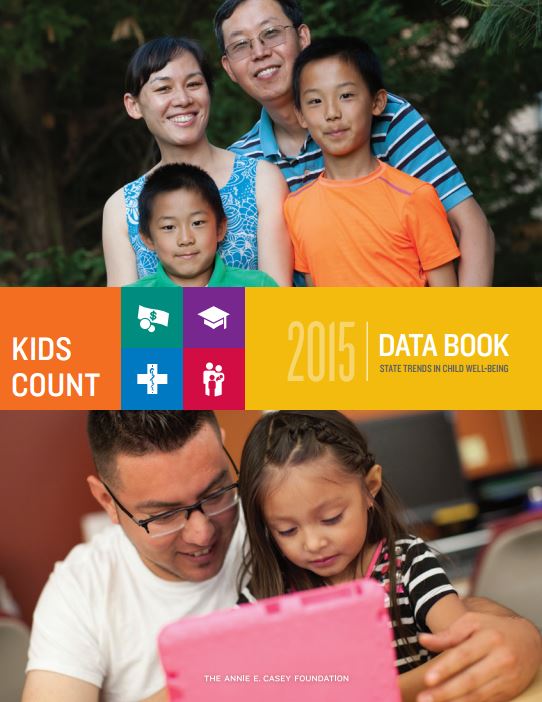 More Children Living In Poverty Now Than During Recession
About 1.7 million more children live in low-income families today than during the Great Recession, according to a new report. The KIDS COUNT Data Book, released annually by the Annie E. Casey Foundation, assesses child well-being nationally and in each state, including the District of Columbia and Puerto Rico. The report ranks states on overall child well-being using an index of 16 indicators. Minnesota holds the top spot in the 2015 Data Book, the first non-New England state to rank first in nearly a decade.