 The Campaign for Grade-Level Reading
June 2015
The Campaign for Grade-Level Reading is a collaborative effort by funders, nonprofits, government agencies, business leaders, states and communities across the nation to ensure that many more children from low-income families succeed in school and graduate prepared for college, a career and active citizenship.

GLR Campaign Announces “More Hopeful Futures” at Clinton Global Initiative Gathering
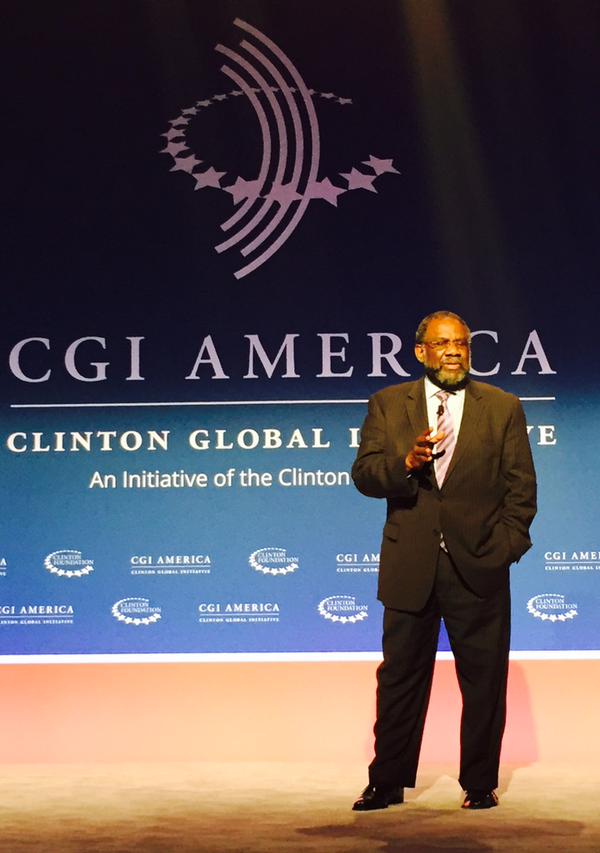 The GLR Campaign was recognized on stage as a featured commitment maker at the Clinton Global Initiative America (CGI America) meeting on June 9. The Campaign announced that it will launch the More Hopeful Futures Initiative in 2017 as the next phase of a decade-long effort to increase reading proficiency among children from low-income families. Over the next three years, the Campaign and key partners will be “road testing” the initiative by reaching at least 50,000 children with an enhanced package of screenings and supports.
“We see this recognition by CGI America as an affirmation of the great work already underway in these local communities. The plans and aspirations embodied in today’s commitment build upon what these communities already have accomplished and anticipate the important work they will continue to do,” said Ralph Smith, managing director of the GLR Campaign. “Our work, going forward, including More Hopeful Futures, draws heavily on the experience, lessons and insights of the civic leaders and public officials who have mobilized their communities and the state and local funders who have supported the work.”
The work is being supported by funding partners in six states (Arkansas, Arizona, California, Colorado, Iowa and New York) that have pledged to invest $34.6 million over the next three years. It’s also being supported by two dozen organizations with exemplary programs that have agreed to align, link and, where practicable, bundle their work to achieve greater impact.
Bay Area GLR Communities Partner with Super Bowl 50 Host Committee on Early Literacy
The Super Bowl is known as one of the sporting world’s biggest spectacles, but the next Super Bowl will be known for something more. For the past several months, the GLR Campaign has been working on an exciting early literacy initiative with the 50 Fund, the legacy fund of the San Francisco Bay Area Super Bowl 50 Host Committee.
The 50 Fund, in partnership with the Campaign, has developed “The Re(a)d Zone,” a 14-month early literacy initiative that will invest in, strengthen and build the capacity of high-quality literacy-enhancing programs that increase third-grade reading proficiency throughout the Bay Area. Co-sponsored by the Bay Area Campaigns for Grade-Level Reading, The Re(a)d Zone will reach more than 50,000 low-income children in a 12-county area.

Communities Nationwide Step Up to #KeepKidsLearning on Summer Learning Day
Communities across the country celebrated Summer Learning Day on June 19, and the GLR Campaign was front and center. More than 90 Campaign communities are “on the map,” hosting over 130 summer learning events and programs throughout the summer. Coalitions, programs, partners and leaders from across the Network have committed to keep more than 190,000 young people healthy and learning this summer.
That number grows every day. Click here to learn how you can join the effort to #KeepKidsLearningthis summer.
New Innovation Brief Highlights Community Self-Assessment Tool
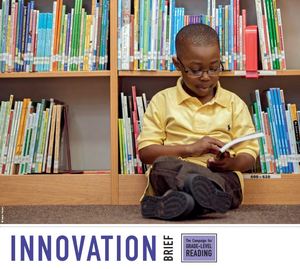 GLR Network communities across the country are taking advantage of the new GLR Community Self-Assessment Toolto reflect on their efforts and make improvements. A new Innovation Brief from the GLR Campaign notes that 77 GLR communities completed the self-assessment by the spring of 2015, answering questions designed to help them evaluate their progress on their action plan and, if need be, revise the plan. The tool also provides communities with information to use when applying for the 2017 All-America City Awards, which will recognize early literacy progress. Click here to read the full brief.
June’s Bright Spots Communities Expand Promising Initiatives to Fight Chronic Absence, Summer Slide
Our Bright Spots Communities this month are expanding their efforts to reach low-income families and at-risk students with innovative programs:
- Waukegan, Illinois Partners in this 2014 Pacesetter community developed a full-day summer learning program — available to hundreds of young children — by combining two already available part-day offerings.
- Las Vegas, Nevada This GLR community hopes to expand its pilot program to reduce chronic absence among at-risk students. Begun at one elementary school, the pilot reduced chronic absence among three student populations with a disproportionately high number of chronically absent students.
- Berks County, Pennsylvania Hundreds of parents receive short videos modeling fun and easy literacy and math activities for young children through ReadyRosie, an online parent engagement tool.

Nutter Releases Details on Philadelphia Early Education Initiative
Philadelphia Mayor Michael Nutter this month released details on his early education initiative, “A Running Start Philadelphia: For Every Child, Birth to Five.” The plan has four central strategies: create a one-stop system where parents can determine whether their children are eligible for public programs; increase funding for improvements to early learning centers in low-income neighborhoods; ensure that all publicly funded early learning programs participate in the state’s quality rating system; and increase average salaries and support for early learning teachers and staff.
Roanoke Introduces “Books on Buses” Program to Encourage Summer Reading
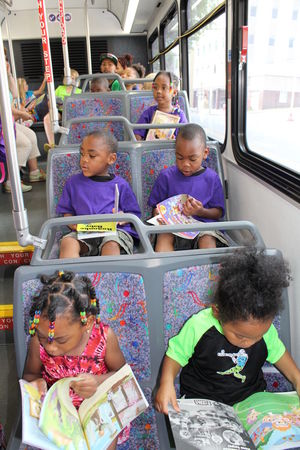 As part of the Star City Reads program in Roanoke, Virginia, Mayor David Bowers announced the launch of “Books on Buses,” which will provide free books to parents and children on Valley Metro buses. The bus routes served by the program were chosen for their high volume of families with young children.
“We had this idea that there’s a lot of parents on the buses,” said Sheila Umberger, Roanoke Public Libraries director, in the Roanoke Times. “The average child from an affluent family may have 200 to 300 books in their home library. A child that’s disadvantaged may have 10.”
Tampa Bay Rays Partner with Suncoast Credit Union for “Reading with the Rays”
The Tampa Bay Rays and star third baseman Evan Longoria will partner with Suncoast Credit Union this summer for the “Reading with the Rays – Read Your Way to the Ballpark” program. The program helps combat summer learning loss by encouraging kids to read 24 hours during the summer months. Participating libraries track kids’ progress and award prizes for reaching certain goals, including two free tickets to a Rays game. Longoria will make visits to local libraries in the weeks following the official kick-off on June 28.
Manatee County Dedicates School Staff to Dropout Prevention
The Manatee County School Board this month voted unanimously to create positions for 24 “graduation enhancement technicians,” who will work to identify students at risk of dropping out and collaborate with parents and social workers to keep them in school. The county had the eighth-highest dropout rate in Florida during the 2013-14 school year, and school officials say chronic absence is one of the biggest challenges at-risk students face.

The Wish You Well Foundation’s mission is “supporting family literacy in the United States by fostering and promoting the development and expansion of new and existing literacy and educational programs.” Past grantees include book drives, one-on-one tutorial programs, and parental support programs. Most requests range from $200 to $10,000. Applications are accepted on a rolling basis. Click here for more information.

Out-of-Class Conditions Have Outsize Impact on Children’s Performance
The social and economic conditions created by poverty can seriously hinder children’s performance in school, according to a new report released this month by the Economic Policy Institute. Five Social Disadvantages That Depress Student Performance: Why Schools Alone Can’t Close Achievement Gaps details the academic impacts of out-of-school circumstances like single parenthood, inadequate access to health care and lead exposure. The authors argue that education policy should aim to alleviate the underlying conditions that can hamper children even before they start school.
“Sesame Street” Boosted School Readiness for Young Children
“Sesame Street” was introduced in 1969 with the explicit goal of preparing young children to enter preschool and kindergarten, and a new study finds that it accomplished that goal. Using a unique comparison of children from neighborhoods with and without strong reception of public broadcasting channels in the 1970s, Early Childhood Education by MOOC: Lessons from Sesame Street finds that preschool-aged children who had better access to “Sesame Street” were more likely to advance through school and graduate on time. The effect was particularly strong for boys, black children and children in high-poverty neighborhoods.
Building a PreK-3rd Grade Bridge in San Francisco
In 2008, the San Francisco Unified School District (SFUSD) began confronting a long-standing problem: while its overall academic achievement was the best of any urban district in California, its achievement gaps were widening, leaving many black, Latino and low-income students behind. A new report from the New America Foundation details how SFUSD has been building a “bridge” between pre-K and third grade in an effort to shrink those gaps. The Power of a Good Idea: How the San Francisco School District Is Building a PreK-3rd Grade Bridge offers powerful lessons for districts and communities across the country.