 The Campaign for Grade-Level Reading
March 2014
The GLR Campaign is a collaborative effort by foundations, nonprofit partners, states and communities across the nation to ensure that more children in low-income families succeed in school and graduate prepared for college, a career and active citizenship.

Teaching & Learning Conference Highlights Campaign’s Work
The Campaign for Grade-Level Reading was one of the sponsors of Teaching & Learning 2014, a March conference that brought together nearly 2,000 teachers and administrators in Washington, D.C., along with such speakers as Microsoft founder Bill Gates, U.S. Education Secretary Arne Duncan and author Doris Kearns Goodwin.
In the opening plenary, GLR Campaign Managing Director Ralph Smith said “education is not a spectator sport” and urged stakeholders from the entire community to get off the sidelines and support educators. He then showed The Statisticks Lottery video, which demonstrates how poverty can weigh down academic achievement and how the GLR Campaign is developing community solutions.
The conference, hosted by the National Board for Professional Teaching Standards, also included sessions with Mind in the Making author Ellen Galinsky and Attendance Works Director Hedy Chang. Galinsky highlighted local efforts in Providence and elsewhere to improve executive functioning, the organizational and planning skills that have proven essential to school success. Chang spoke on a panel on chronic absence along with educators from three GLR Network communities: Baltimore; Richmond, Va.; and New Britain, Conn.
For National Volunteer Week, Recognize Reading Tutors
 We know that volunteer reading tutors are crucial to our early literacy efforts, providing the extra hands and hearts to ensure that more children from low-income families learn to read proficiently. For National Volunteer Week, celebrated April 6-12, we are collecting names of tutors and tutoring organizations to honor on our website and in social media. Keep submitting names here through April 12 and feel free to share photos and short descriptions, as well.
Also, we have created some template materials if you would like to recognize volunteers or host an event. We developed a template certificate, a sample op-ed and talking points, among other tools, to use during the week.

Bright Spots Communities Now Featured on Website
This month, we added a new category to the “Bright Spots” section of our website, featuring Bright Spots Communities that have demonstrated promising or successful practices. Our first features include:
- In Worcester, Massachusetts, the public library is partnering with schools to open libraries in four public elementary schools, expanding access for hundreds of children including during the summer, when the school libraries will remain open.
- In Stockton, California, when the future was uncertain for the local Reach Out and Read program, the community’s GLR coalition found new funding sources to keep it running. About 6,000 students now benefit from the program, in which health care providers distribute books and talk to families about reading.
- In New Britain, Connecticut, a campaign to reduce chronic absence led to a decline in the percentage of chronically absent students – for kindergartners, from 30 to 18 percent; for first graders, from 24 to 13 percent.
- In Vero Beach, Florida, the Moonshot Moment early literacy campaign sponsored a Read Across America event, part of a broader campaign to engage stakeholders across the community to meet their goal of having 90 percent of children reading on grade level by the end of third grade in 2018.
Bright Spots showcase the work that Grade-Level Reading Network communities are doing to make progress on school readiness, school attendance and summer learning by 2016. You can nominate your community for a Bright Spot by emailing Betsy Rubiner.
To share updates on your community’s efforts, email Phyllis Jordan at pjordan@gradelevelreading.net.

Federal Childhood Screening Effort Announced
The U.S. Dept. of Education and the Department of Health and Human Services launched a new initiative last week to encourage early childhood developmental and behavioral screenings that help identify learning delays as early as possible and improve support.
Birth to 5: Watch Me Thrive! provides families with resources on developmental screening tools and guidance on how to find local help when learning delays are identified. Recent data from the Centers for Disease Control and Prevention show that some learning disorders, like autism, are diagnosed after age 4 even though they can be detected much earlier. Encouraging parents to screen their children for developmental or behavioral disorders early on can ensure that learning delays are detected immediately and proper support is given.
Proposed Budget Would Expand Early Education
President Obama’s proposed budget for 2015, released at the beginning of March, includes $500 million for preschool development grants aimed at expanding pre-K programs to include even the most disadvantaged children. This funding would be in addition to the $250 million included in last year’s budget agreement that will be distributed in the form of competitive grants for states seeking to bolster long-standing preschool programs or continue to develop new ones.
The spending plan also would: expand funding for the Early Head Start-Child Care partnerships; include state incentives for full-day kindergarten; extend home-visiting funding; and give a slight increase to Head Start. Read more here.
Abriendo Puertas Director Honored by the White House
The White House today is honoring Sandra Gutierrez, national program director of Abriendo Puertas/Opening Doors, as a Cesar Chavez Champion of Change. Gutierrez is one of 10 community leaders chosen for reflecting the spirit of the Latino leader’s legacy.
Abriendo Puertas, a key partner of the GLR Campaign, helps Latino families with children from birth to age 5 to expand parenting skills and become advocates for their children. Since its launch in Los Angeles in 2007, the program has trained more than 1,000 facilitators and provided its curriculum to more than 30,000 families in 256 cities across the country.
“Providence Talks” Garners National Attention
A home-based early literacy program in Providence, R.I., is drawing national attention with a story in The New York Times and NPR in recent weeks. The “Providence Talks” program aims to close the achievement gap by increasing the verbal interactions that children from low-income families experience. Research shows that these children can hear 30 million fewer words than their more affluent peers by the time they are 3 years old.
Families agree to have their children wear a “word pedometer” that tracks the number of words they hear and speak each day. Early Head Start programs then follow up with home visits to participating families. Parents are taught how to engage in meaningful and productive conversation with their children to strengthen early literacy skills.

Target Offers Grants to Promote a Love of Reading
Target is accepting applications for Early Childhood Reading Grants, providing $2,000 for programs that foster a love of reading and encourage young children, preschool through third grade, to read together with their families. Reading grants support programs such as library story times and family reading nights that take place between September 2014 and August 2015. The deadline is April 30, 2014. Apply here.
Dollar General Offers Grants to Help Struggling Readers
The Dollar General Literacy Foundation is accepting grant requests through their Youth Literacy Grants program to provide funding of up to $4,000 to schools, public libraries and nonprofit organizations to help students who read below grade level or are experiencing difficulty reading. The application deadline is May 22, 2014. Apply here.
Roanoke Libraries Receive Grant for Early Literacy
Early reading programs in Roanoke, Virginia, received a boost with a $40,000 grant to Roanoke Public Library Foundation from the Life Ring Foundation, a private local philanthropy serving southwest Virginia.
Life Ring’s gift, which supports the Star City Reads initiative aligned with the GLR Campaign, will bring authors of popular children’s books to schools and libraries, pay for board books for every infant born in local hospitals and launch a parent engagement series.

Pre-K and the Digital Divide 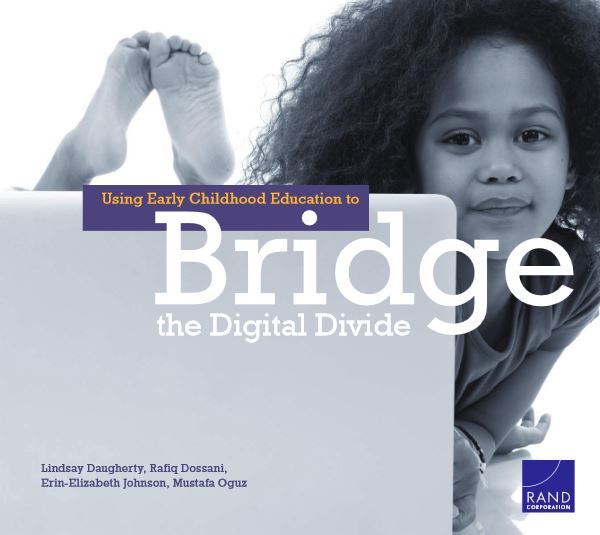
The RAND Corporation’s Using Early Childhood Education to Bridge the Digital Divide highlights five key questions to consider when integrating technology into early childhood education. Findings from the report’s research show that technology literacy opens the door to new learning opportunities for young children, but more supports are needed to realize the benefits of this technology in early childhood education.
Reading and Boys of Color
The Promise Neighborhood Institute has released a new resource guide, Ensuring Black Males are Successful Early Readers, that details successful programs and practices that Promise Neighborhoods are implementing to place black boys on a path to educational achievement. The guide offers resources and models designed to help communities support early reading success among black boys.
Attendance Toolkit for Teachers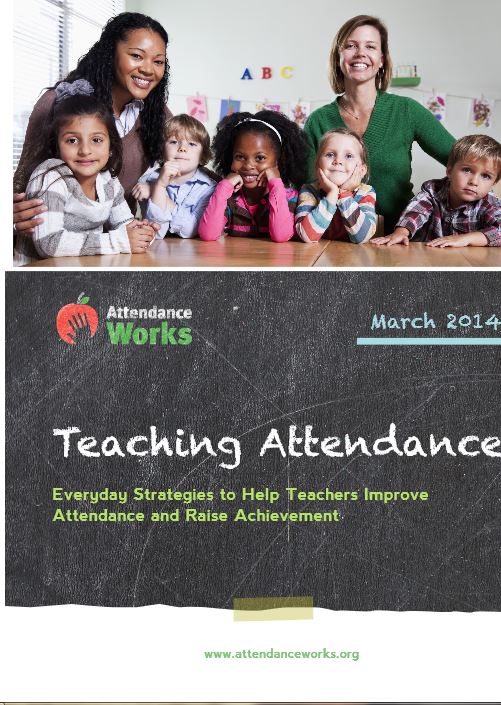
To help educators build a culture of attendance and maintain it throughout the school year, Attendance Works has created a teacher toolkit,Teaching Attendance: Everyday Strategies to Help Teachers Improve Attendance and Raise Achievement. Resources include tip sheets and templates to drive up attendance in classrooms and engage the entire community.